

- A practical guide to choosing the right filtration and air-cleaning capacity for your space.
- 1. Start with particle filtration
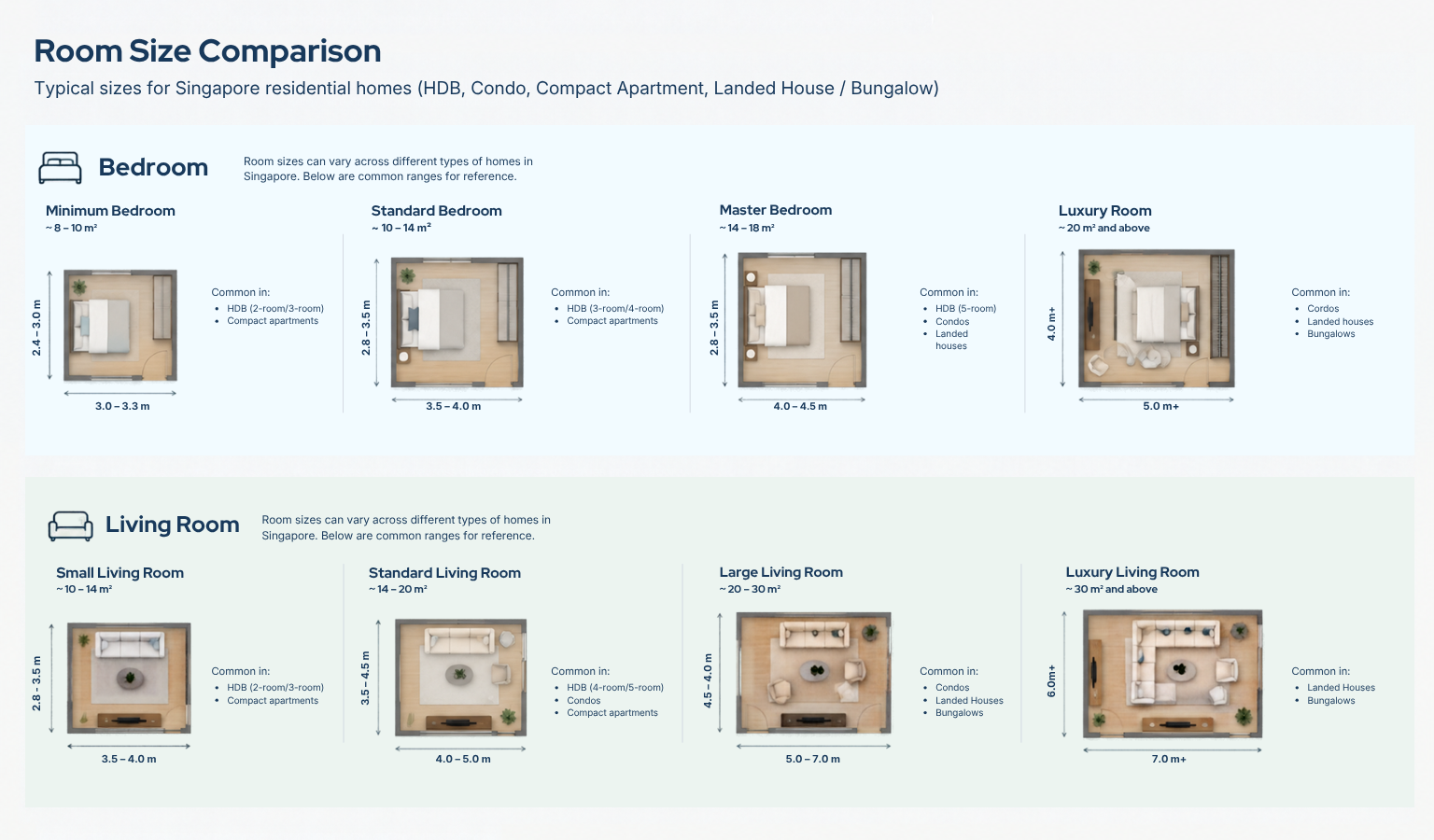
- 2. Match the purifier to your space
- 3. Do you also need gas and odour filtration?
- 4. Don't forget placement
- 5. Remember the filters
- So, how do you choose?
- For haze, the formula is simple:
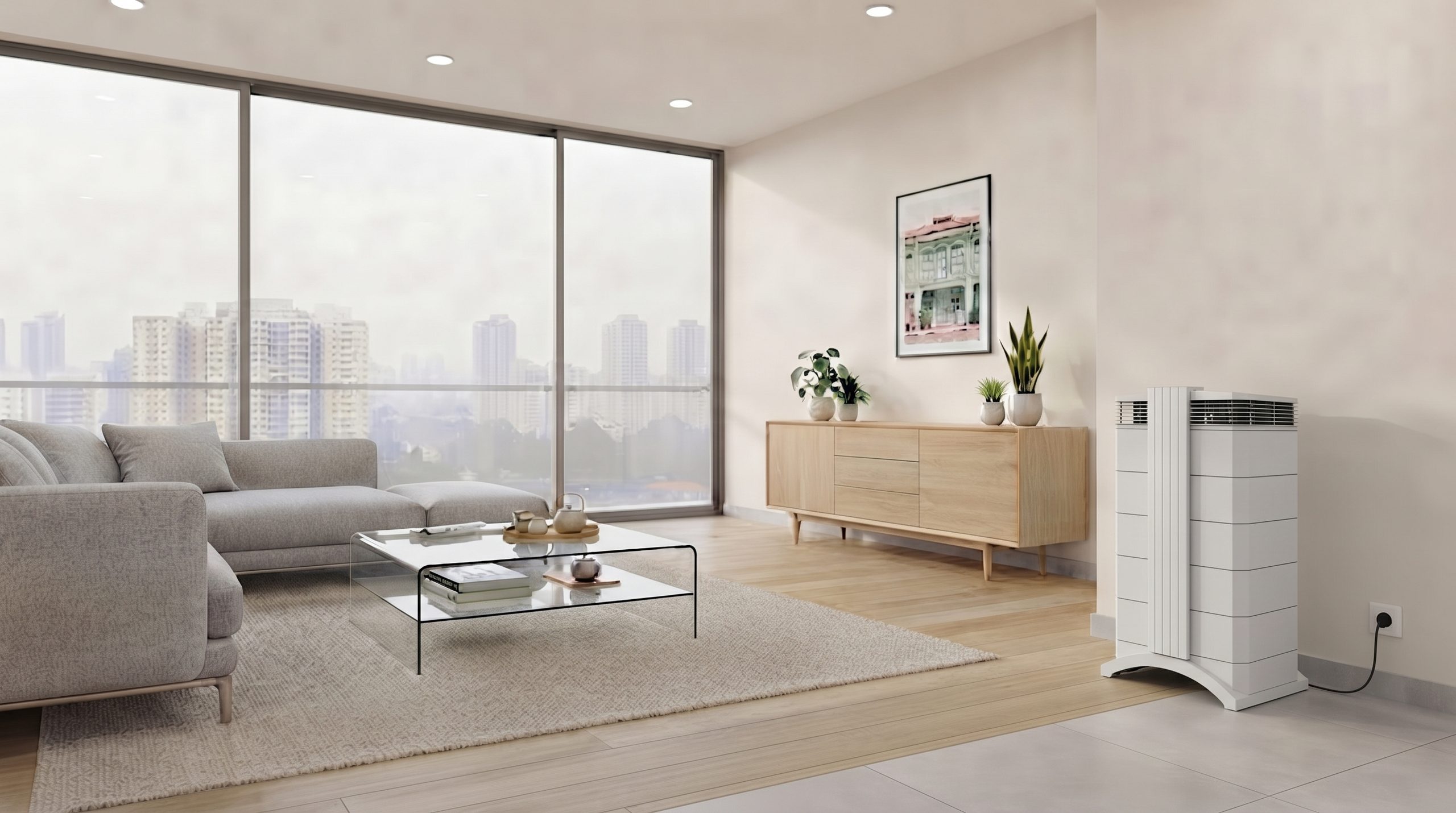
A practical guide to choosing the right filtration and air-cleaning capacity for your space.
Haze may be the reason you’re looking for an air purifier. But the right choice depends on more than the haze itself.
Your room size, the pollutants you’re trying to address, and the filtration system behind the purifier all matter.
Rather than choosing based on one specification or simply choosing the largest model, start with what your space actually needs.
1. Start with particle filtration
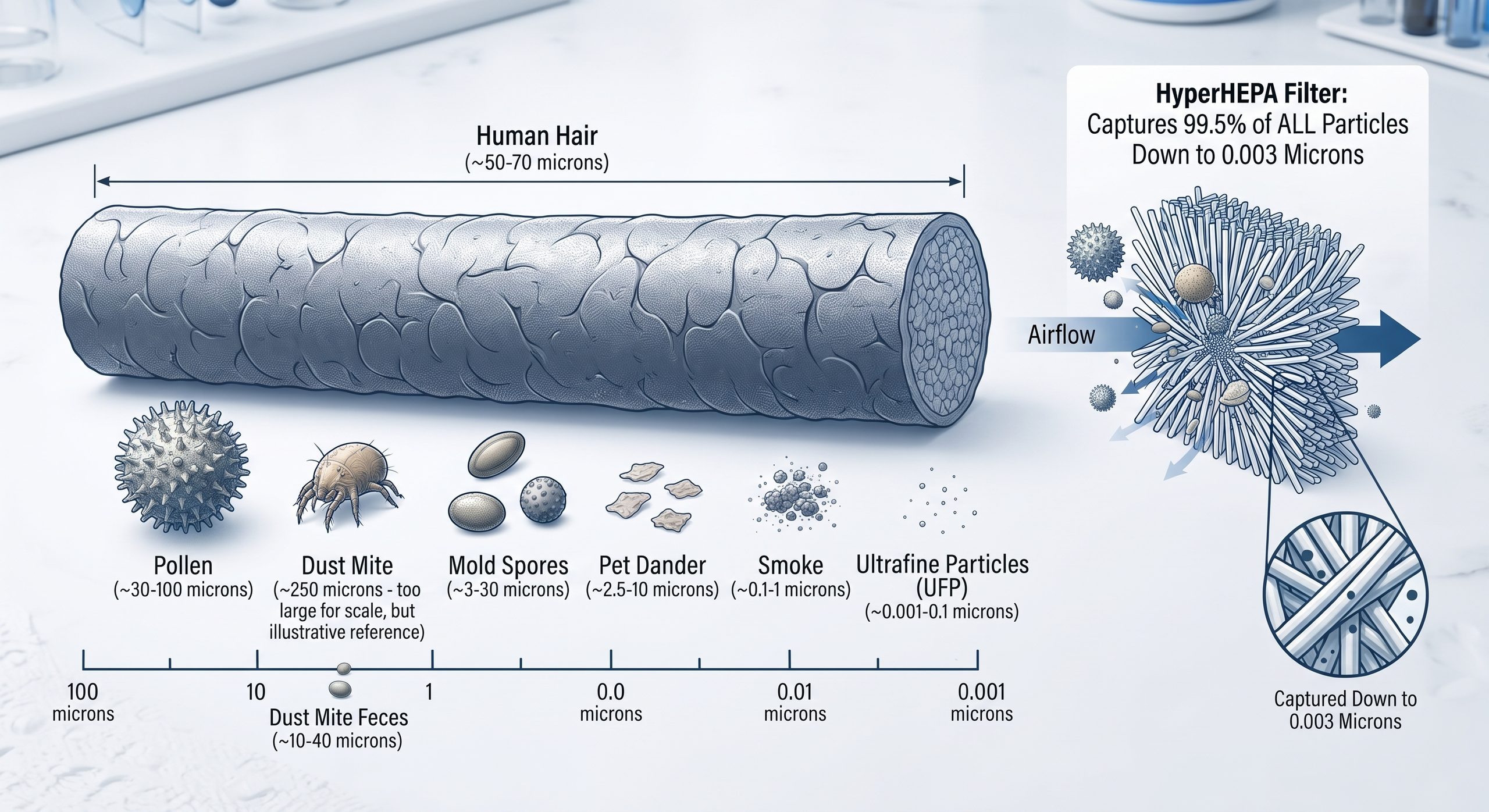
Haze is primarily a concern because of the fine particles it brings into the air, including PM2.5.
For fine particles, NEA recommends highly efficient filters such as HEPA and advises consumers to look at the suitability of the purifier for their intended room.
IQAir’s HealthPro range uses HyperHEPA® filtration for fine and ultrafine particulate matter. IQAir states that its HyperHEPA filtration has been tested and certified to filter at least 99.5% of particles down to 0.003 microns.
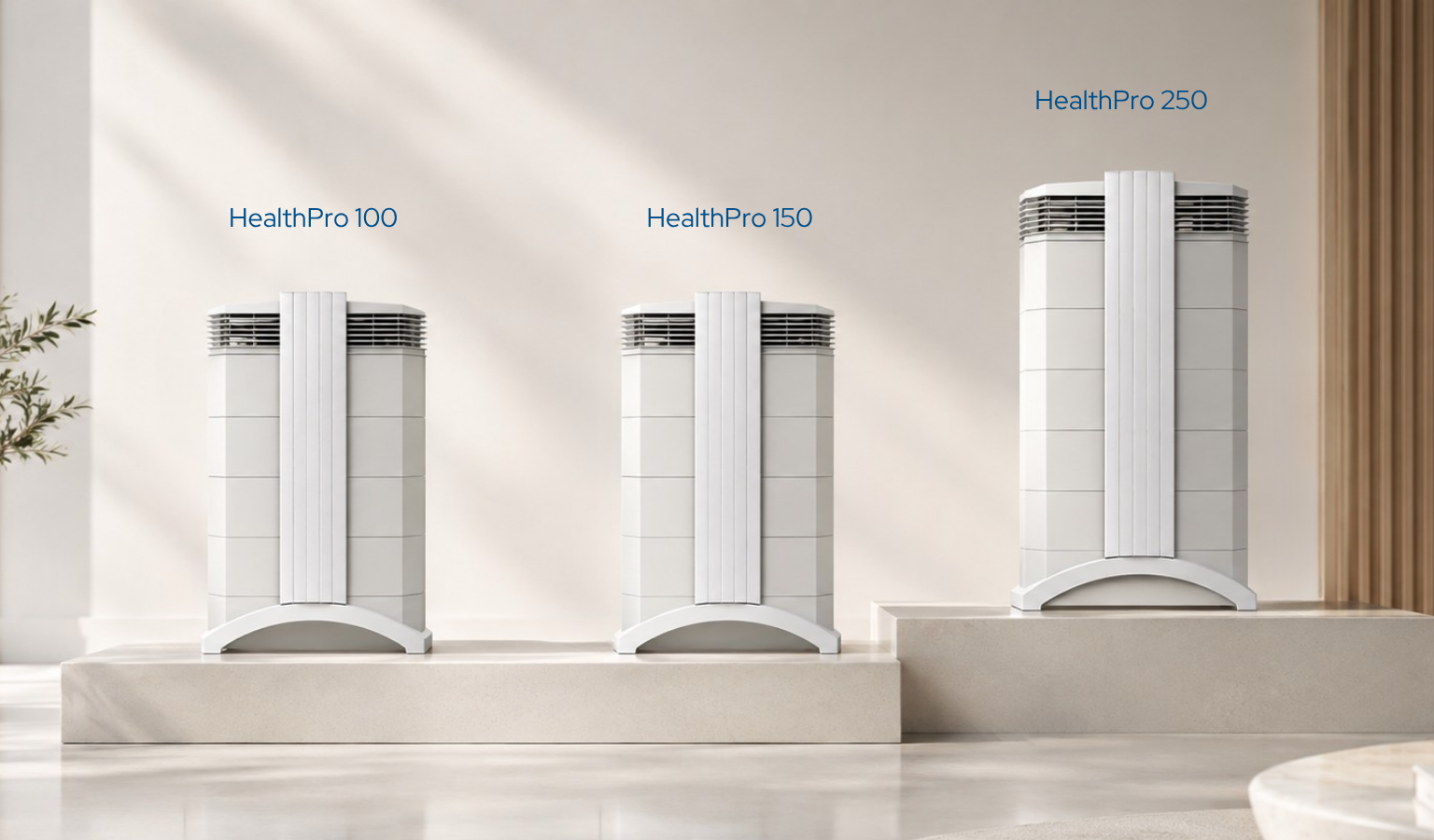
For example, the HealthPro 100 uses a PreMax pre-filter followed by a HyperHEPA main particle filter. The HealthPro 150 and 250 also use HyperHEPA filtration, with additional filtration for gases and odours.
For haze, particle filtration should be your starting point.
2. Match the purifier to your space
A high-efficiency filter is only part of the equation. The purifier also needs to move enough air for the room.
NEA recommends considering both room size and Clean Air Delivery Rate (CADR) when choosing a portable air cleaner for smoke haze. A higher CADR means the device can deliver more clean air to the room. NEA also notes that smoke CADR is the most appropriate CADR measure for haze pollutants.
Not every purifier uses or publishes CADR in the same way, so for IQAir’s HealthPro range you can also look at its published air-delivery specifications.
For example:
HealthPro 100: up to 560 m³/h
HealthPro 150: up to 350 m³/h
HealthPro 250: up to 440 m³/h
These figures are maximum fan-speed air-delivery figures from the respective technical specifications and should not be treated as directly interchangeable with CADR.
The key idea is simple:
The larger or more open the space, the more air-cleaning capacity you need.
3. Do you also need gas and odour filtration?
For haze, particle filtration is the main consideration. But your home may have other indoor-air concerns too.
This is where the three HealthPro models differ.
HealthPro 100
The HealthPro 100 uses a two-stage filtration system: a PreMax pre-filter followed by a HyperHEPA main particle filter. It is therefore the straightforward option within the HealthPro range if your main focus is particle filtration.
HealthPro 150
The HealthPro 150 adds gas and odour filtration to its particle filtration. Its PreMax MG filter combines pre-filtration with activated carbon and impregnated activated alumina for control of a range of chemical contaminants and odours.
This can be relevant if your indoor environment has concerns beyond haze particles, such as everyday odours or certain gaseous pollutants.
HealthPro 250
The HealthPro 250 takes this further with a three-stage configuration: a PreMax pre-filter, a V5-Cell gas and odour filter, and a HyperHEPA main particle filter. IQAir lists the V5-Cell as using activated carbon and chemisorption media for a broad range of gases and odours.
The HealthPro 250 also has a maximum air delivery of 440 m³/h, making its published airflow higher than the HealthPro 150.
So, rather than asking “Which purifier is best for haze?”, a more useful question is: “What does my space need?”
4. Don’t forget placement
Where you put the purifier matters.
Give the unit enough space for air to enter and leave freely. Avoid blocking its air intake or outlet with furniture, curtains, or other objects.
During haze, the purifier should also be used alongside other practical measures. NEA advises keeping outdoor air from entering unnecessarily when outdoor air quality is poor and says portable air cleaners can be used to further reduce indoor particle levels.
An air purifier is therefore one part of your indoor-air strategy, rather than a replacement for checking outdoor conditions.
5. Remember the filters
Filters collect particles and eventually need to be replaced.
IQAir’s HealthPro models include filter-life monitoring. IQAir states that actual filter life varies according to usage and pollution levels. For example, its current HealthPro 250 technical specifications give average filter-life figures of 12–18 months for the PreMax filter, 15–21 months for the V5-Cell gas filter, and 36–48 months for the HyperHEPA filter, based on stated average usage conditions.
This is particularly worth remembering during periods of heavier pollution.
Follow the filter-life indicator and manufacturer’s replacement guidance rather than assuming a filter will always last for a fixed period.
So, how do you choose?
If you’re choosing an air purifier specifically for Singapore haze, keep it simple:
1. Look at particle filtration
Choose a system designed to handle fine and ultrafine particles.
2. Consider the size of your space
Make sure the purifier has sufficient air-cleaning capacity for the room.
3. Decide whether you need gas and odour filtration
If you do, look at a model with a dedicated gas and odour filtration stage.
4. Think about how you’ll use it
Placement, operating conditions and filter maintenance all affect how the purifier performs in everyday use.
There isn’t one HealthPro model that suits every room or every household.
The better approach is to start with your space and your air-quality concerns, then choose the appropriate filtration and air-cleaning capacity.
For haze, the formula is simple:
Right filtration + right capacity + right use.
Not sure which model suits your space? Tell Suprayi your room size and what you’re looking to address, and the team can help you compare the available options