


- Understanding Allergies in Singapore: What You're Fighting
- How Air Purifiers Help Allergies: The Science
- What to Look for in an Air Purifier for Allergies
- Our Recommendation for the Best Air Purifiers for Allergies in Singapore
- How to Use Your Air Purifier for Maximum Allergy Relief
- FAQ
- Conclusion: Choosing Your Allergy Relief Solution
Waking up with itchy eyes, endless sneezing, and a blocked nose? You’re not alone. Over 40% of Singaporeans suffer from allergic rhinitis, battling invisible allergens that float through their homes every day. Whether it’s pollen during flowering season, dust mites thriving in our tropical humidity, or pet dander from your beloved cat, indoor allergens can make life miserable.
The good news? The right air purifier can dramatically reduce your allergy symptoms—many customers report 60-80% improvement within the first two weeks. But with dozens of air purifiers claiming to help allergies, how do you choose one that actually works?
In this comprehensive guide, we’ll explain exactly what causes allergies in Singapore, which air purifier features matter most for allergy relief, and review the best medical-grade air purifiers proven to capture even the smallest allergen particles. By the end, you’ll know precisely which air purifier can transform your home into an allergy-free sanctuary.
Understanding Allergies in Singapore: What You’re Fighting
Before choosing an air purifier, it’s essential to understand what triggers your allergies in Singapore’s unique tropical environment.
Common Allergens in Singapore Homes:
Before choosing an air purifier, it’s essential to understand what triggers your allergies in Singapore’s unique tropical environment.
Dust Mites – The #1 allergen culprit in Singapore. Our year-round heat and 70-90% humidity create perfect breeding grounds for these microscopic creatures. They thrive in mattresses, carpets, and upholstered furniture, and their fecal matter becomes airborne, triggering severe allergic reactions. Size: 10-40 microns.
Pollen – Singapore has year-round flowering plants, with peak pollen seasons during Southwest Monsoon (July-September) and Northeast Monsoon (December-March). Common allergenic plants include Acacia, Casuarina, and grass pollen. Size: 15-200 microns, but proteins can break down to <1 micron.
Mold Spores – Our tropical humidity means mold grows rapidly in bathrooms, air conditioners, and poorly ventilated areas. Mold releases spores that become airborne and trigger respiratory allergies. Size: 3-100 microns.
Pet Dander – Cat and dog dander (tiny skin flakes) is a major allergen for many Singaporeans. Even if you don’t have pets, dander can be carried on clothing from visitors or neighbors. Size: 0.5-10 microns.
Cockroach Allergens – HDB flats and older buildings may have cockroach infestations. Their saliva, feces, and body parts become airborne allergens. Size: varies, <10 microns when airborne.
Why Singapore’s Climate Makes Allergies Worse:
High humidity keeps allergen particles suspended in air longer, while lack of natural ventilation in air-conditioned homes concentrates allergens indoors. This creates a year-round allergy cycle that makes relief harder to find.

How Air Purifiers Help Allergies: The Science
Air purifiers work by pulling indoor air through specialized filters that physically capture and trap allergen particles, preventing them from reaching your nose, eyes, and lungs.
The Filtration Process:
1. Air Intake: A powerful fan draws contaminated air into the air purifier
2. Pre-Filter: Captures large particles like dust and hair (>10 microns)
3. HEPA Filter: Traps fine particles, including pollen, dust mites, and pet dander (0.3 microns and larger)
4. Clean Air Release: Purified air circulates back into the room
Medical Evidence:
Multiple studies demonstrate air purifiers’ effectiveness for allergies. A 2023 study published in the Journal of Allergy and Clinical Immunology found that participants using HEPA air purifiers experienced:
- 53% reduction in allergy symptoms
- 42% decrease in medication use
- Significant improvement in sleep quality
- Better overall quality of life
Singapore-Specific Benefits:
In Singapore’s climate, air purifiers serve double duty: reducing allergens while managing humidity-related mold growth. During haze season (August-October), they also protect against outdoor pollen and pollution entering homes.
Critical Factor: Not all air purifiers are created equal. The filter quality and particle capture size determine whether you’ll experience real relief or just expensive disappointment.
What to Look for in an Air Purifier for Allergies
Choosing an air purifier for allergy relief requires understanding five critical specifications:
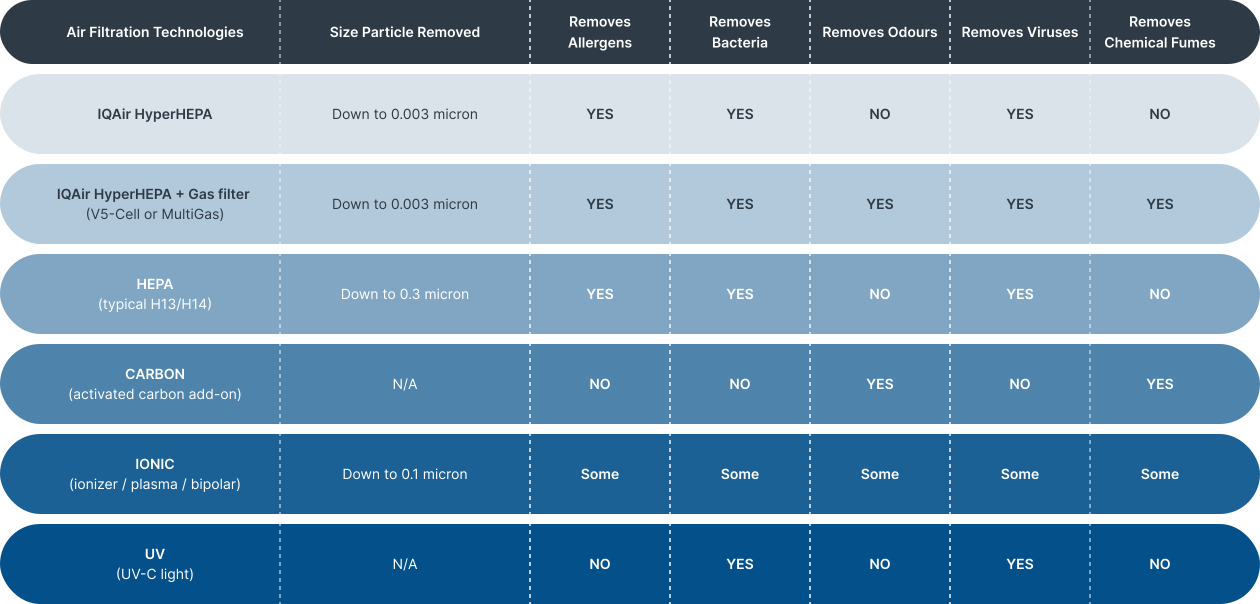
1. Filter Technology: HyperHEPA vs Standard HEPA
Standard HEPA (H13):
- Captures 99.5% of particles down to 0.3 microns
- Meets basic allergy needs for pollen and large dust particles
- Limitation: Misses ultrafine allergen proteins and broken-down particles (<0.3 microns)
HyperHEPA Technology (IQAir):
- Captures 99.5% of particles down to 0.003 microns
- 100 times more effective than standard HEPA
- Captures ALL allergens including broken-down pollen proteins, small pet dander particles, and mold fragments
- Independently tested and certified by third-party laboratories
Why Size Matters: While whole pollen grains are large (15-200 microns), they break into smaller protein fragments (<1 micron) that cause the most severe reactions. Only HyperHEPA captures these ultrafine allergen particles.
2. CADR (Clean Air Delivery Rate)
CADR measures how quickly an air purifier cleans air in a specific room size. For allergies, look for:
- Minimum CADR: 200 m³/h for a bedroom (15-20 m²)
- Ideal CADR: 300-500 m³/h for living spaces (30-40 m²)
- High CADR: 500+ m³/h for open-plan HDB flats or allergy sufferers needing rapid air changes
Singapore Context: HDB 4-room flats have master bedrooms around 15 m², while living rooms are 20-25 m². Calculate room volume (length × width × height) and ensure your air purifier can exchange air 5-6 times per hour.
3. Room Coverage Area
Match the air purifier to your room size:
- Small bedroom (10-15 m²): 50-80 m² coverage air purifier
- Master bedroom/study (15-20 m²): 80-120 m² coverage
- Living room (20-30 m²): 120-150 m² coverage
- Open concept (30+ m²): Multiple units or 150+ m² coverage
Tip: Buy slightly larger than needed for maximum effectiveness during high pollen seasons or haze.
4. Noise Level for Nighttime Use
Allergies often worsen at night when you’re exposed to mattress dust mites. Your air purifier should run continuously while you sleep:
- Silent operation: <20 dB (night mode)
- Low speed: 25-35 dB (library-quiet)
- Medium speed: 40-50 dB (background conversation)
IQAir Advantage: Swiss-engineered “fan-in-center” design with sound-dampening filters creates near-silent operation even on high settings.
5. Filter Lifespan & Replacement Costs
Total Cost of Ownership:
- Initial purchase price
- Annual electricity costs (look for energy-efficient models)
- Filter replacement frequency and cost
Standard HEPA: Replace every 6-12 months ($100-200/year) HyperHEPA (IQAir): Lasts 3-4 years ($150-200 total), lower annual cost
Our Recommendation for the Best Air Purifiers for Allergies in Singapore
Based on filtration technology, CADR performance, Singapore customer reviews, and verified allergy relief results, here are the top three air purifiers for allergy sufferers in Singapore.
Why It’s Excellent for Allergies:
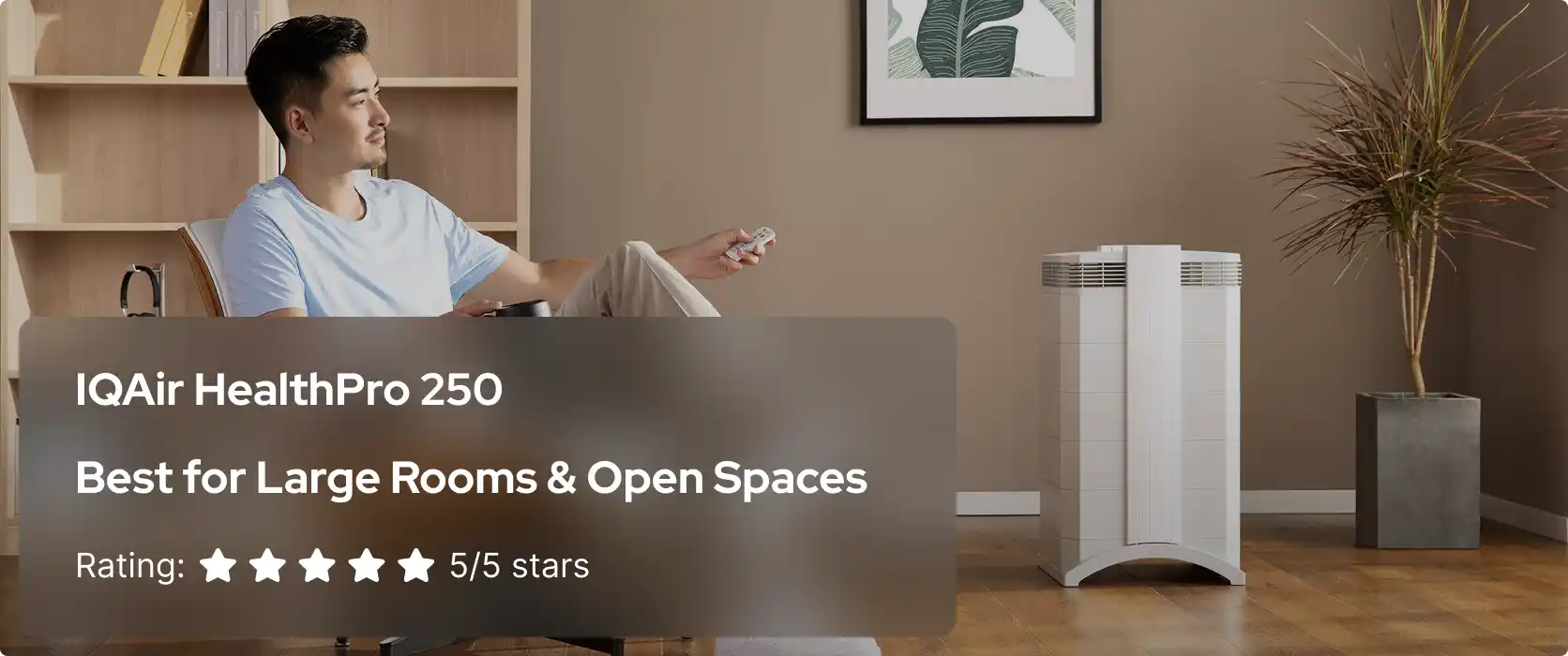
The HealthPro 250 offers the same HyperHEPA filtration as the Plus model but with even higher airflow capacity, making it ideal for larger Singapore homes or open-concept HDB layouts.
Key Features:
- HyperHEPA Filter: Same 0.003-micron capture as HealthPro Plus
- Coverage: Up to 125 m² (large living rooms, open-plan layouts)
- CADR: 500 m³/h (highest in residential category)
- Noise Level: 27 dB on night mode
- Filter Life: HyperHEPA lasts 3-4 years
- Medical-Grade: Used in Singapore hospitals and clinics
Singapore-Specific Advantages:
- Powerful enough for combined living-dining areas in executive HDB flats
- Rapid air changes during haze emergencies
- Professional-grade performance for home use
Best For:
- Large living rooms (25+ m²) or open-concept spaces
- Multi-generational households need comprehensive coverage
- Allergy sufferers wanting fastest air cleaning
Price: SGD $1,799
How to Use Your Air Purifier for Maximum Allergy Relief
Buying the right air purifier is just the first step. Here’s how to maximize allergy relief in your Singapore home:
1. Placement Matters
DO
- Place in the room where you spend most time (usually bedroom)
- Position at least 30cm from walls for proper airflow
- Keep away from curtains or furniture that blocks air intake
- Elevate slightly (on a low table) for better circulation
DON’T
- Place in corners or behind furniture
- Put directly against air-con vents (interferes with airflow)
- Block air intake or exhaust
Singapore Tip: In HDB bedrooms, place near the window side (opposite air-con) for optimal circulation
2. Run Continuously for Best Results
24/7 Operation: Allergens constantly accumulate. Keep your air purifier running:
- Day: Medium speed for active filtration
- Night: Low/sleep mode for quiet operation
- During haze/high pollen: High speed for 2-3 hours, then medium
Don’t Turn Off: Allergens build up within hours. Continuous operation maintains allergy-free environment.
3. Combine with Allergy-Reduction Practices
Air purifiers work best as part of comprehensive allergy control:
- Wash bedding weekly in hot water (60°C+) to kill dust mites
- Use allergen-proof mattress and pillow covers
- Vacuum with HEPA-filter vacuum twice weekly
- Keep humidity below 60% (use dehumidifier if needed)
- Remove carpets if possible (harbor dust mites)
- Keep pets out of bedroom
4. Monitor & Maintain
- Check filter indicator lights monthly
- Replace pre-filters every 12-18 months
- Replace HyperHEPA filters every 3-4 years
- Wipe exterior monthly to remove dust buildup
Singapore Note: During haze season, filters may need earlier replacement. Monitor air quality and filter condition.
FAQ
Conclusion: Choosing Your Allergy Relief Solution
Living with allergies in Singapore doesn’t have to mean constant discomfort and medication dependence. The right air purifier with HyperHEPA filtration can transform your indoor environment into an allergy-free sanctuary where you can finally breathe easy, sleep soundly, and wake up refreshed.
Key Takeaways:
1. HyperHEPA technology is essential for capturing ALL allergen sizes, especially ultrafine particles that standard HEPA misses
2. Room coverage matters – match your air purifier to your space size for optimal effectiveness
3. Continuous operation delivers best results – run 24/7 for maintained allergy relief
4. Real results are proven – Singapore customers report 60-80% symptom improvement
Our Top Recommendation:
For most Singaporean allergy sufferers, the IQAir HealthPro 250 offers the perfect balance of coverage, technology, and value. Its HyperHEPA filtration captures all allergen types, the V5-Cell handles odors, and Swiss engineering ensures reliable operation in Singapore’s tropical climate.
[Sample Quote] Air pollution is now the world’s greatest single environmental risk.